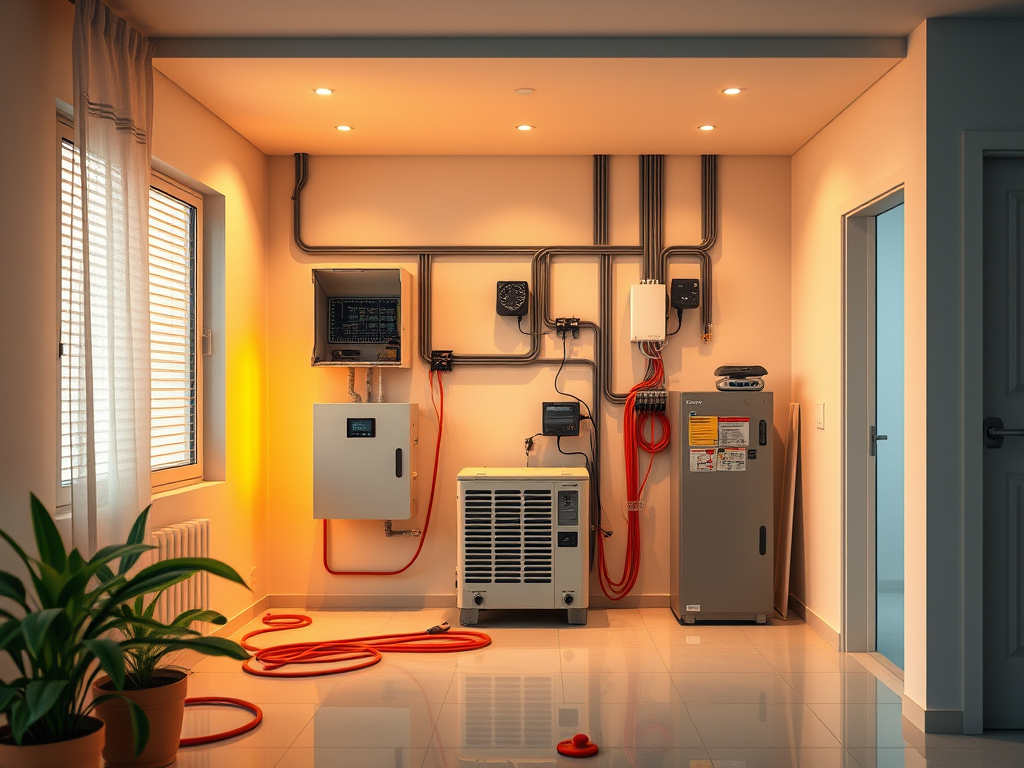
The house needs power, but power must be placed wisely. In present-day Vastu practice, inverters, generators, electrical panels, and strong power devices are most often placed in the south-east, the zone associated with Agni, or fire. A secondary option sometimes used is the north-west, especially when the south-east is unavailable. What is usually avoided is the north-east, because that quarter is reserved for clarity, prayerfulness, and lighter energies.
This is one of the clearest examples of why more perfect Vastu matters. The house becomes healthier when heat, voltage, and electrical activity are kept in a zone already aligned with fire. Such placement feels symbolically right and practically orderly. It reduces the sense that the sacred or restful parts of the house are being disturbed by constant active energy.
Correction is straightforward and hopeful. If the inverter is already in a less ideal location, keep the area clean, ventilated, dry, and properly maintained. Prevent wire chaos. Avoid overloading plugs. Repair worn fittings promptly. In Vastu, the first electrical remedy is not exotic — it is disciplined maintenance. The second is correct zoning. Together they make the home feel safer and more coherent.
Common defects and remedies
| Common error | Why it disturbs balance | Positive remedy |
|---|---|---|
| Inverter in north-east | Brings active fire energy into a subtle zone | Shift to south-east if possible |
| Wire clutter and overloaded plugs | Creates disorder and risk | Organise cables and reduce overload |
| Dampness near electrical units | Weakens safety and symbolic order | Keep area dry and ventilated |
| Generator placed randomly outdoors | Reduces both safety and Vastu coherence | Use a controlled fire-friendly zone |
| Ignoring maintenance | Turns utility into hazard | Service equipment regularly |
These placements reflect current home-Vastu appliance practice centred on the fire principle.

Leave a Reply