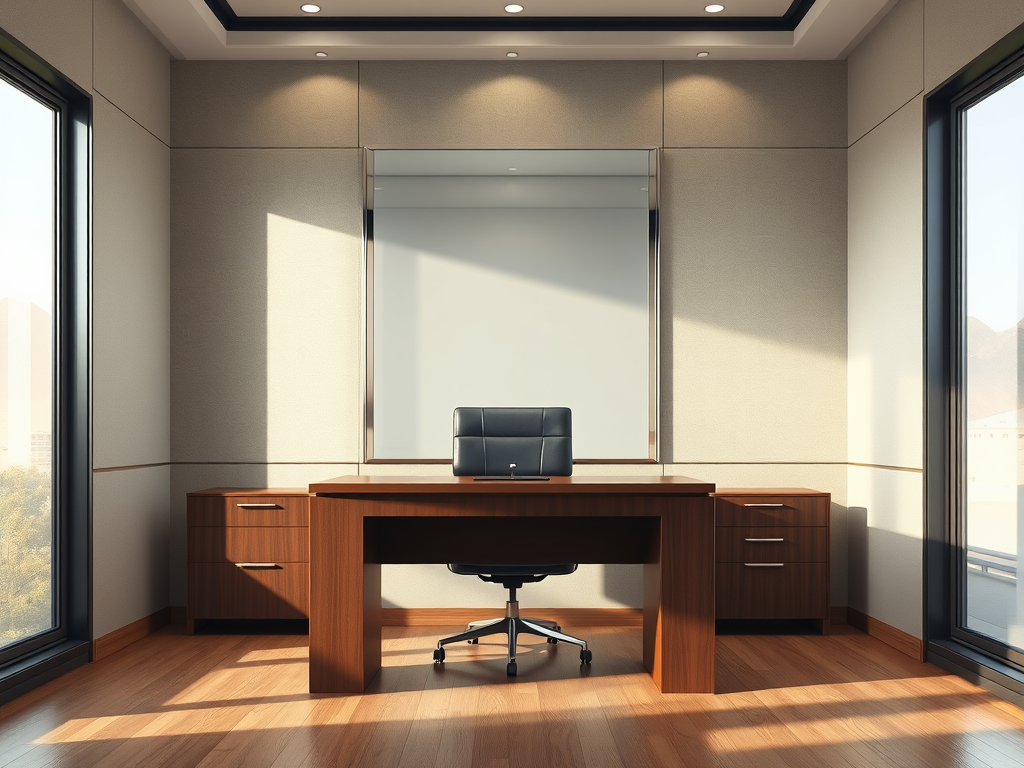
Perfect Vastu in an office gives authority a place to sit properly. The owner’s or director’s cabin is commonly preferred in the south-west, while the person seated there should ideally face east, north, or north-east, with a solid wall behind. This arrangement is valued because it combines command, visibility, and grounded decision-making. The desk itself is often best aligned in east or north facing positions, especially for concentration and sustained work.
Mirrors in offices must be used carefully. They can brighten space and subtly expand it, especially when placed to reflect light or a clean, prosperous scene. Many Vastu traditions favour mirrors in the north or east, but avoid them in ways that create visual anxiety, reflect clutter, or undermine the owner’s authority. In a business setting, reflection should amplify openness, not weaken command.
This is why perfect Vastu matters so much at work: leadership is affected by what is behind us, before us, and around us. A weak cabin, glassy backing, cluttered desk, or poorly positioned mirror can make a space feel less decisive. A corrected office, even without major renovation, can feel more composed, more commanding, and more prosperous.
Common defects and remedies
| Common error | Why it weakens success | Positive remedy |
|---|---|---|
| Owner cabin in a weak zone | Reduces authority and steadiness | Strengthen south-west with heavier furniture or shift cabin if possible |
| Desk facing no positive direction | Lowers focus | Reorient to east or north |
| Glass or open void behind the owner | Weakens symbolic support | Use a solid backing or visual reinforcement |
| Mirror reflecting clutter or stress zones | Multiplies disorder | Let it reflect light and clean space |
| Overcrowded desk | Reduces clarity | Keep the work surface disciplined and functional |
A more perfect office Vastu gives business the dignity of order. It turns the workplace into a field of clearer judgement, steadier leadership, and more confident growth.

Leave a Reply