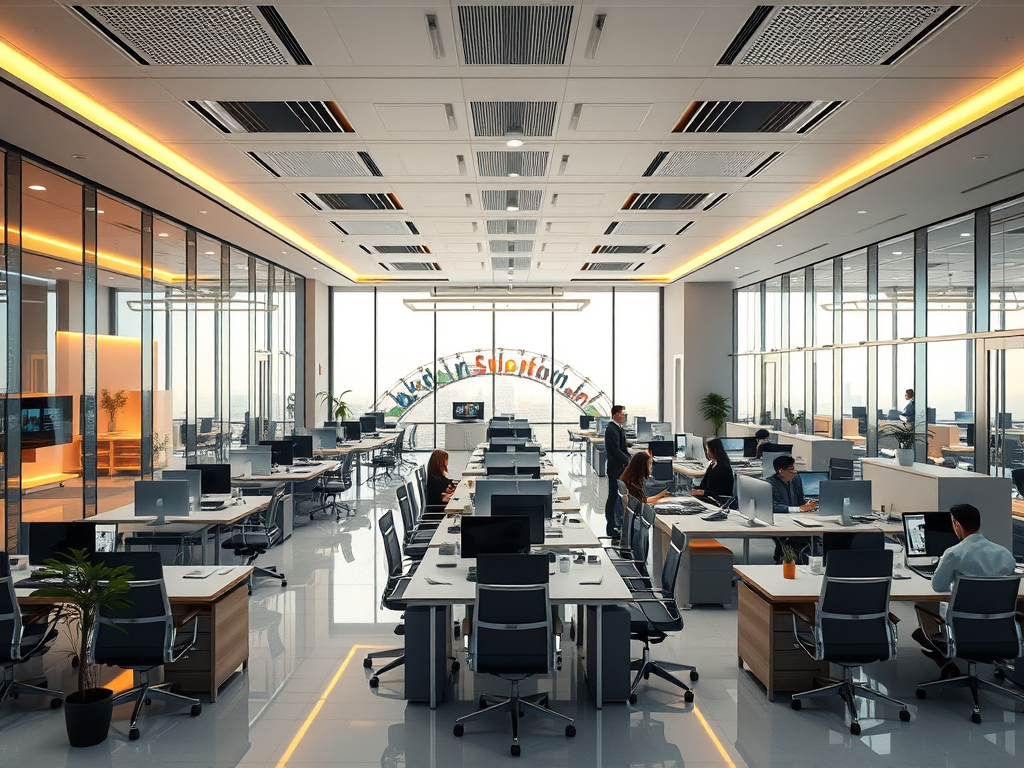
A workplace is more than a site of transactions. It is an ecosystem of pressure, ambition, concentration, negotiation, fatigue, and invention. Vastu Shastra reads this reality with uncommon subtlety. It proposes that the arrangement of departments, leadership spaces, entrances, and employee seating can shape the morale and momentum of an organisation.
The south-west is considered the finest placement for the cabin of the chief executive or managing director. This direction carries the qualities of stability, authority, and grounded judgement. When leadership occupies a firm and protected zone, the symbolic centre of decision-making grows stronger.
Sales and marketing functions benefit from the north-west, the region associated with movement and exchange. This is the quarter of air, and therefore of circulation, outreach, and swift connection. Teams whose work depends upon persuasion, networking, and target achievement are thought to flourish when placed in such an energetic field.
Finance and accounts are generally suited to the north, traditionally linked with wealth and commercial growth, though the south-east may also serve where monetary activity is tied to vigorous expansion. The reception area, meanwhile, is best placed in the east or north-east so that the organisation’s first encounter with clients carries brightness, openness, and a sense of welcome. Conference rooms do well in the west or north-west, where dialogue and practical deliberation can proceed with clarity.
One of the most intriguing aspects of office Vastu is its concern with working direction. Employees facing north or east while seated are believed to enjoy sharper concentration and lower mental strain. The source material itself cites notable gains: reconfigured office spaces in prominent corporations have been associated with rises in employee satisfaction and improvements in collaboration and creativity. Productivity, too, is said to benefit measurably when orientation and departmental placement are corrected.
Whether one accepts the metaphysical framework in full or approaches it through environmental psychology, the underlying wisdom is striking. Leadership requires steadiness. Sales needs movement. Finance benefits from order. Meetings demand balanced communication. Entrances shape perception. Direction influences posture, light, and emotional ease.
This is why Vastu continues to interest modern enterprises. It offers a language through which space can be made to support organisational purpose. In an age where offices often become either sterile or chaotic, Vastu restores a sense of deliberate arrangement. It proposes that productivity is not produced by pressure alone. It also arises from environment—how one sits, where one works, what one sees on entering, and how the inner map of the office reflects the functions it contains.
A well-composed office does not merely look efficient. It feels aligned. That felt order, subtle though it may be, is often the difference between strain and sustained success.
| Office function | Ideal direction | Organisational value |
|---|---|---|
| CEO / MD cabin | South-west | Strengthens authority and strategic calm |
| Sales & marketing | North-west | Supports movement, outreach, and targets |
| Accounts / finance | North / South-east | Encourages monetary focus and growth |
| Reception | East / North-east | Creates a positive first impression |
| Conference room | West / North-west | Aids communication and collaboration |
Leave a Reply