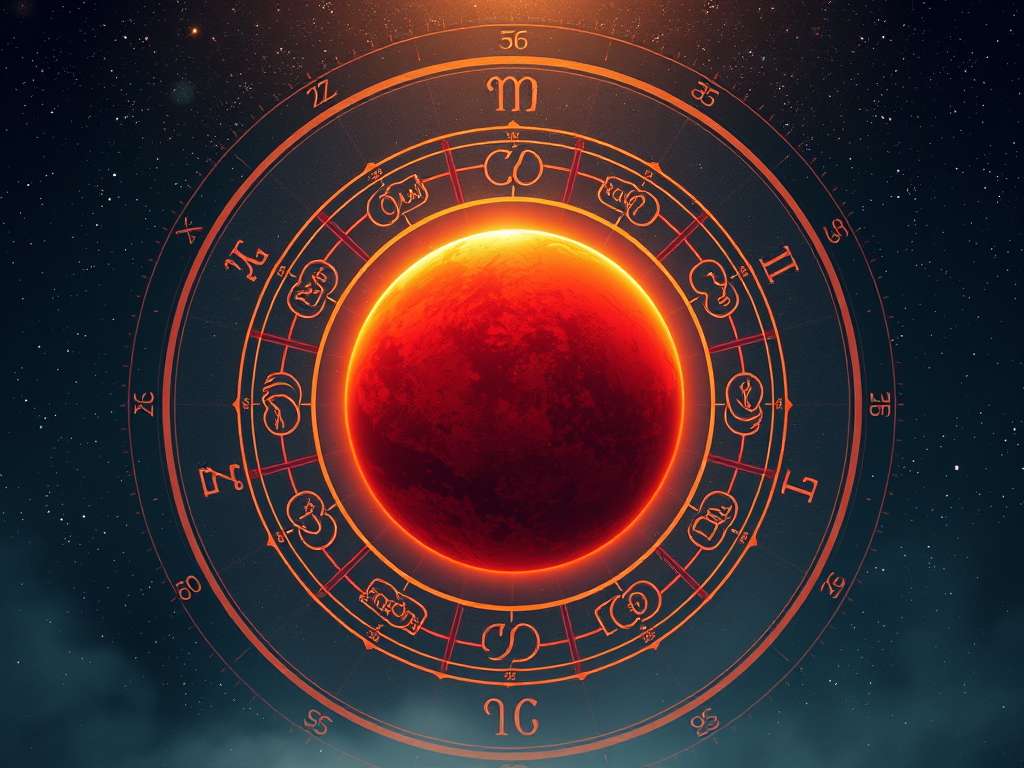
In Vedic astrology, Mars — traditionally called Mangal — symbolises action, initiative, and the capacity to confront challenges. While modern popular astrology often associates Mars only with anger or conflict, classical Jyotiṣa interprets it more precisely as the principle governing execution, courage, and operational energy.
Understanding Mars’s symbolic function helps explain how individuals respond to pressure, competition, and decisive situations.
Mars as the Planet of Action
Traditionally, Mars symbolises:
- Physical initiative
- Decisive movement
- Operational execution
- Competitive engagement
- Protective instinct
Rather than representing aggression alone, Mars reflects the ability to act under demanding conditions.
Thus, Mars often indicates how individuals handle urgency and confrontation.
Mars and Personal Drive
Because Mars governs initiative, astrologers examine its placement to understand:
- Readiness to take action
- Tolerance for competitive environments
- Response to obstacles
- Willingness to assert boundaries
Strong Mars influence often supports decisive behaviour, especially in environments requiring rapid response or sustained effort.
Mars and Conflict Handling
Mars also symbolically relates to how individuals manage:
- Disagreement
- Confrontation
- Competitive pressure
- Defence of position
A balanced Mars may support constructive assertiveness, while a stressed Mars placement may indicate reactive or impulsive responses.
However, interpretation always depends on the full chart structure.
Mars in Professional Context
Mars may symbolically connect with professions involving:
Yet classical astrology never assigns career solely from Mars placement; house relationships and planetary strength remain essential.
- Engineering or technical execution
- Military or protective roles
- Sports or physical competition
- Emergency response or operational management
Mars and the Concept of Manglik
One of the most discussed associations with Mars is the concept commonly known as Manglik.
Traditionally, this refers to certain Mars placements in relational houses that may emphasise:
- Strong independence
- Assertive relational behaviour
- Heightened emotional intensity
Classical interpretation treats this not as a fixed negative condition but as a symbolic indicator requiring broader compatibility analysis.
Thus, Mars placement must always be evaluated within the complete chart context.
Mars in Different Houses
Mars’s symbolic expression varies depending on house placement.
For example:
- In career houses, it may emphasise competitive professional environments
- In relational houses, it may influence assertiveness in partnerships
- In financial houses, it may reflect active resource pursuit
Interpretation always includes planetary strength and supporting aspects.
Mars and Timing Cycles
During Mars planetary periods, life may emphasise:
- Increased workload
- Decisive career movement
- Physical relocation or operational shifts
- Competitive or urgent responsibilities
Such periods often involve heightened activity rather than passive development.
Why Mars Is Often Misunderstood
Popular astrology frequently portrays Mars only as a source of conflict.
Classical interpretation instead recognises Mars as essential for:
- Execution capacity
- Protective strength
- Operational decision-making
- Crisis management
Without Mars influence, plans may remain theoretical rather than implemented.
In Vedic astrology, Mars represents action, initiative, and operational strength rather than mere aggression. Understanding its symbolic role allows responsible interpretation aligned with classical Jyotiṣa principles while recognising that behaviour depends on broader chart structure and life context.

Leave a Reply