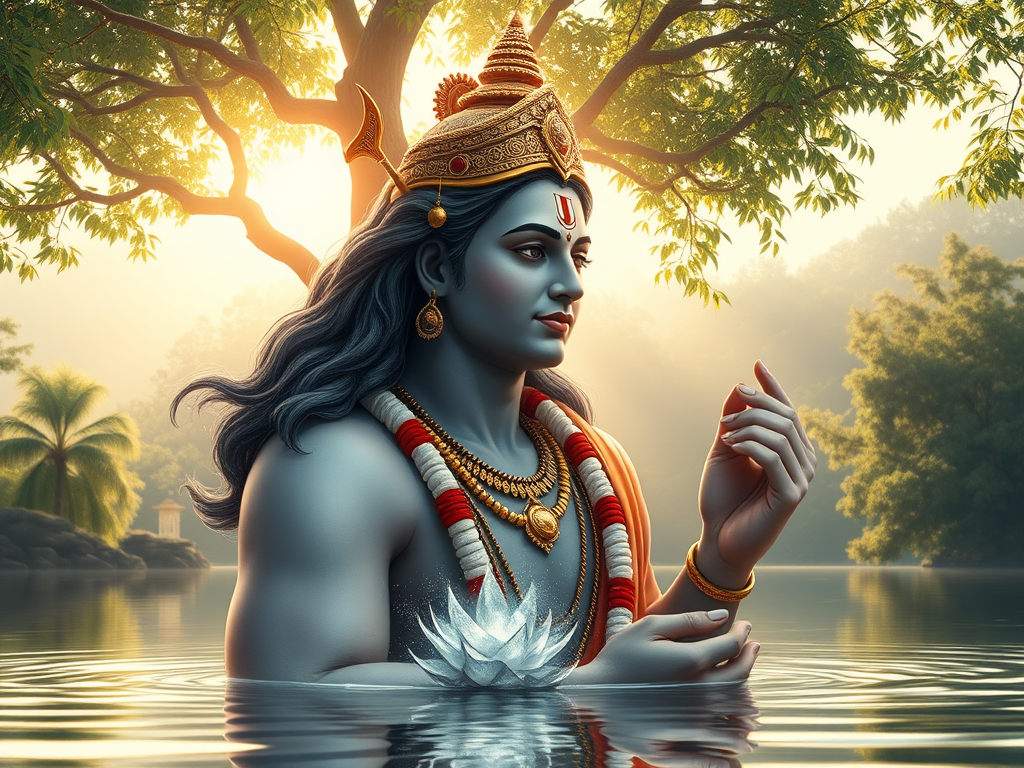
The Ramcharitmanas is one of the most loved and spiritually powerful works in Hindu tradition. Composed by the great saint-poet Goswami Tulsidas, it is much more than a literary retelling of the Ramayana. For millions of devotees, it is a living scripture, a devotional treasure, and a sacred guide for daily life. It has nourished homes, temples, villages, and hearts for centuries, bringing the divine presence of Lord Rama into the lives of ordinary people with warmth, sweetness, and spiritual depth.
What makes the Ramcharitmanas so special is its closeness to the people. While the ancient story of Lord Rama was already known and revered, Tulsidas presented it in a language that could be understood, recited, sung, and cherished by the masses. In doing so, he did not merely retell a sacred story — he opened a doorway through which devotion could enter every household. Through the Ramcharitmanas, the glory of Lord Rama became not only a subject of scriptural study, but a living experience of prayer, remembrance, and love.
The title Ramcharitmanas carries profound beauty. It may be understood as the sacred lake filled with the divine deeds of Lord Rama. Just as a clear and holy lake refreshes, purifies, and calms those who come near it, the Ramcharitmanas offers spiritual peace, moral clarity, and devotional joy to all who read or hear it. Its verses are not only meant to inform the mind, but to purify the heart and awaken love for God.
At the center of the Ramcharitmanas is Lord Rama, who is adored not only as the noble king of Ayodhya, but as the Supreme Lord Himself appearing on earth out of compassion for humanity. In this sacred work, Rama shines as the embodiment of mercy, righteousness, truth, tenderness, and divine majesty. He is both near and exalted — the loving protector of devotees and the eternal Lord of the universe. This devotional vision gives the Ramcharitmanas its unique sweetness and makes it deeply beloved in Hindu faith.
The text follows the sacred journey of Lord Rama through seven Kandas, each unfolding a different aspect of divine life and spiritual teaching. From the joy of Rama’s birth to the beauty of His marriage, from the lessons of exile to the triumph of righteousness, from the devotion of Hanuman to the glory of Rama’s reign, the Ramcharitmanas presents a complete spiritual path through story. Every episode carries moral guidance, emotional depth, and devotional power. Readers do not simply observe the story — they enter into it with reverence and love.
One of the greatest gifts of the Ramcharitmanas is its emphasis on Bhakti, the path of loving devotion. Tulsidas teaches with great tenderness that in this age, the most accessible and powerful way to reach God is through remembrance of His name, surrender of the heart, and faith-filled devotion. The holy name of Ram is celebrated throughout the text as a source of purification, strength, peace, and liberation. This message has brought immense comfort to devotees, because it assures everyone that divine grace is not far away. One need not possess great scholarship or austere discipline alone; sincere devotion is itself a sacred path.
This is one of the reasons the Ramcharitmanas became so close to the masses. It made spirituality accessible, affectionate, and personal. In its verses, devotion is not distant or difficult. It is expressed through prayer, recitation, kirtan, service, humility, and loving remembrance. It teaches that the heart that calls upon Rama with faith is never empty. This universal spiritual accessibility has made the Ramcharitmanas a scripture for all — for saints and scholars, but equally for families, laborers, elders, youth, and simple devotees.
Another deeply cherished feature of the Ramcharitmanas is its musical and poetic form. Written in chaupais, dohas, and other lyrical meters, it is meant not only to be read, but to be sung and heard. The sweetness of its rhythm has carried it into the devotional life of generations. Across countless homes and temples, its verses are recited in prayer gatherings, festivals, and devotional observances. The tradition of Akhand Ramayan Path, in which the text is recited continuously with devotion, reflects the immense reverence it holds in Hindu society. Through such living traditions, the Ramcharitmanas remains not just a book, but a shared spiritual experience.
The Ramcharitmanas also offers luminous portraits of ideal character and sacred relationships. Lord Rama stands as the highest model of truth, restraint, compassion, and righteous conduct. Sita is revered as divine strength, grace, purity, and the universal motherly presence of compassion and dignity. Lakshmana represents devoted service and unwavering loyalty. Bharata shines as a symbol of humility, renunciation, and fraternal love. Through these exalted figures, the scripture teaches that family life, when rooted in dharma and devotion, becomes a sacred field of spiritual growth.
Among all its beloved characters, Hanuman holds a uniquely treasured place in the hearts of devotees. In the Ramcharitmanas, Hanuman is the perfect servant of God, the ideal devotee, and the embodiment of strength joined with humility. His every action is centered on Lord Rama. He seeks no praise, no power, and no reward for himself. His greatness comes entirely from devotion. Through Hanuman, the Ramcharitmanas teaches one of the most uplifting truths in Hindu spirituality: that loving service to God is greater than worldly status, and that true strength is born from surrender.
The Sundar Kand has a particularly special place in devotional life. It is loved and recited as a source of courage, hope, faith, and divine protection. Devotees turn to it in times of difficulty because it fills the heart with confidence in the grace of Lord Rama and the power of Hanuman’s devotion. Its enduring popularity shows how deeply the Ramcharitmanas speaks to the emotional and spiritual needs of ordinary people.
Another beautiful contribution of the Ramcharitmanas is its spirit of harmony within Hindu thought. It presents devotion in a way that unites rather than divides. It honors the sacred relationship between Lord Rama and Lord Shiva, showing that divine love is enriched by reverence for all forms through which God is worshipped. In this way, the text nurtures unity, humility, and broad-hearted devotion. It also brings together different streams of spiritual understanding by affirming that the Divine may be experienced both with form and beyond form. Such teachings helped make the Ramcharitmanas a bridge of love and understanding within the broad and beautiful world of Sanatana Dharma.
For Indian society, the Ramcharitmanas is far more than a revered scripture. It is woven into cultural memory, devotional practice, family life, and moral upbringing. Its verses are heard in temples, homes, village gatherings, festivals, and public recitations. Children grow up hearing its stories. Elders recite its lines in prayer. Communities gather around it in moments of celebration and reflection. It has helped shape ideals of conduct, reverence, duty, patience, compassion, and trust in God across generations.
The enduring strength of the Ramcharitmanas lies in its ability to comfort the heart while elevating the soul. It teaches that in every circumstance, devotion to Lord Rama brings inner strength. It reminds humanity that truth, humility, and surrender are never lost. It shows that divine grace is available to all, and that a life centered on God becomes beautiful, purposeful, and blessed.
That is why the Ramcharitmanas remains one of the most cherished pillars of Hindu devotion. It is a scripture of sweetness and strength, of poetry and prayer, of story and salvation. It brings together the highest truths of faith with the simplest expressions of love. For the devotee, it is a companion in sorrow and joy. For the family, it is a guide to noble living. For society, it is a fountain of values. And for the seeker, it is a path leading directly toward divine remembrance and grace.
To read or hear the Ramcharitmanas is to enter a sacred world filled with the glory of Lord Rama, the devotion of Hanuman, the purity of Sita, and the timeless beauty of dharma. It continues to inspire millions because it speaks not only to the intellect, but to the heart. In every age, it remains an immortal gift of bhakti, a luminous expression of Hindu faith, and a spiritual treasure for all humanity.
Leave a Reply