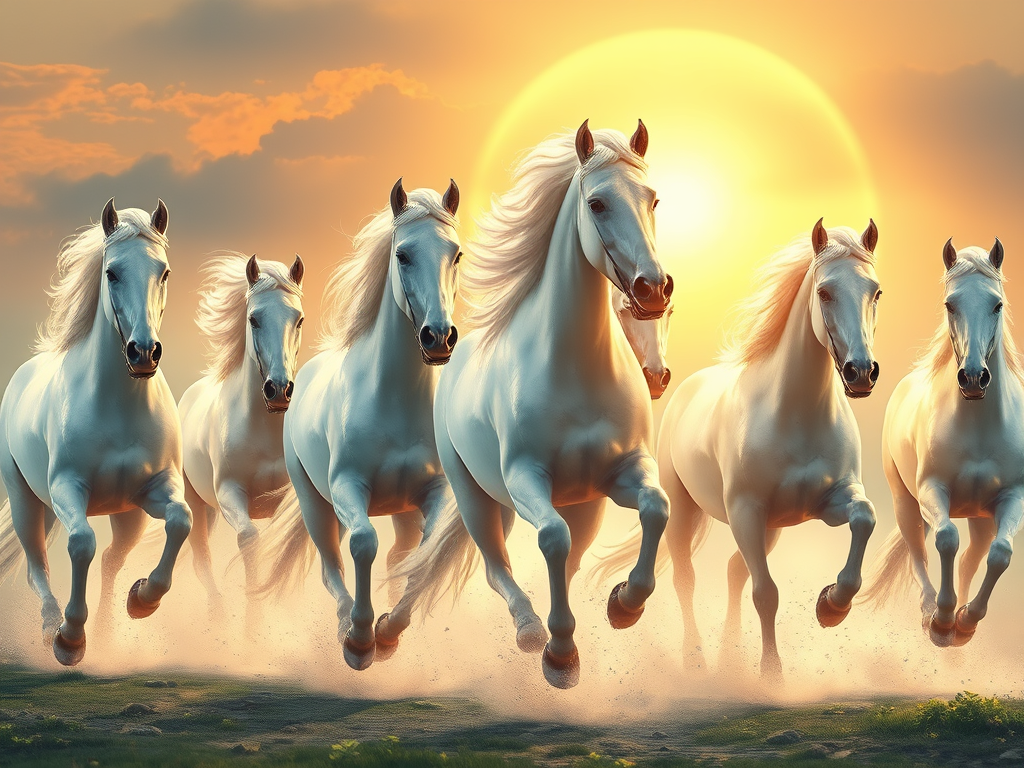
The image of seven horses has endured in Indian imagination because it belongs to the radiant symbolism of Surya, the solar deity whose chariot is drawn by seven steeds. From that sacred image arose, in later household practice, the use of seven-horse paintings as emblems of movement, prestige, vitality, and worldly progress. While the decorative remedy is later than the sacred icon, its appeal rests upon an older and nobler root.
A solar image belongs most naturally to the east, for that is the direction of dawn, awakening, illumination, and public visibility. When placed upon the east wall, the image becomes a visual reminder of disciplined movement and rising fortune. The north may also be used where the intention is prosperity or professional advancement, for the northern direction has long been linked with gain and mercantile flow.
The question of colour is often clouded by fashion. The safest and most graceful choice is white or bright-toned horses, because these correspond more readily to light, purity, and solar clarity. Green has its own sacred beauty, particularly in relation to fertility, renewal, and plant-life, but it does not hold the same natural affinity with the chariot of the sun.
The number seven has deep symbolic force in Indian thought. It suggests rhythm, completeness, and ordered unfolding: seven days, seven notes, seven horses carrying the radiance of time itself. Hence the image is best kept dynamic but serene. The horses should appear forward-moving, balanced, unharmed, and spirited without savagery. Vastu does not favour agitation masquerading as energy.
This image is often used for career growth, money, or public success, yet its finest meaning is broader. It stands for disciplined advance. It tells the house that movement should be purposeful, not frantic; luminous, not boastful. When such an image is chosen with care, it can bring not only decorative force but also symbolic momentum.
| Aspect | Traditional-symbolic meaning | Practical guidance |
|---|---|---|
| Seven horses | Solar force and rhythmic progress | Use for uplifting momentum |
| Best wall | East first, north second | East for vitality, north for gain |
| Best colour | White or luminous tones | Prefer brightness over aggressive colour |
| Best mood | Forward, calm movement | Avoid violent or chaotic imagery |
Leave a Reply